


You open your eyes in the morning and immediately feel that gritty, uncomfortable sensation. Your eyes feel dry, scratchy, and maybe even a bit painful. This frustrating experience happens to many people, and you’re not alone in wondering why your eyes feel worse in the morning than any other time of day. Waterdown Optometric Clinic has helped countless patients understand and address this common concern.
Morning dry eyes occur because your tear production naturally decreases during sleep, while environmental factors in your bedroom can accelerate tear evaporation and irritate your eye surface overnight. Your eyes work hard to maintain moisture throughout the day, but several factors during your sleep hours can disrupt this delicate balance. Understanding what leads to dry eye symptoms can help you find the right solutions for comfortable mornings.
What Happens to Your Eyes During Sleep
Overnight Tear Production Changes
Your body produces fewer tears while you sleep. This natural slowdown means less lubrication spreads across your eye surface during those important eight hours. Even if your eyelids don’t close completely — which happens more often than you might think — your eyes can dry out quickly.
Your tear film, which normally protects and moisturizes your eyes, breaks down over the long hours without regular blinking. Without conscious blinking to redistribute moisture, dry spots can develop on your cornea. Dry eye conditions often become more noticeable after this overnight period without proper tear distribution.
Environmental Factors in Your Bedroom
Your bedroom environment plays a bigger role than you might expect. Heating systems and air conditioning can drop humidity levels significantly, creating conditions that pull moisture from your eyes. Even if the temperature feels comfortable, the air might be too dry for your eyes.
Dust mites in your bedding and pillows can also irritate your eyes overnight. Air circulation from fans or vents blowing directly toward your bed can increase tear evaporation while you sleep.
Signs Your Eyes Are Too Dry in the Morning
- Gritty or sandy sensation in eyes
- Burning or stinging when you blink
- Blurry vision that clears with blinking
- Difficulty opening eyes comfortably
- Stringy mucus discharge around eyelids
How Morning Dry Eyes Feel Different
Morning dry eye symptoms feel more intense than daytime dryness. You might struggle to open your eyes fully, or feel like something is stuck under your eyelid. The discomfort often peaks right when you wake up, then gradually improves as your natural tear production kicks back in.
Some people notice their vision stays blurry for several minutes after waking. This happens because your tear film needs time to redistribute evenly across your eye surface. Meibomian glands that produce the oily layer of tears may need time to function properly after hours of inactivity.
What Makes Morning Dryness Worse
Sleep Habits & Environment
Certain sleep positions can worsen morning dry eyes. Sleeping on your stomach or side sometimes prevents your eyelids from closing completely. Fans pointing toward your bed or heating vents near your pillow area can create air currents that dry out your eyes faster.
Your sleep mask or pillowcase material might also contribute to the problem if they prevent proper eyelid closure or trap allergens near your face. The dry winter months particularly affect tear stability, as cold, dry air worsens dry eye symptoms.
Daily Activities That Affect Overnight Recovery
Extended screen time before bed reduces your blink rate, leaving your eyes already dry when you fall asleep. Contact lenses worn late into the evening can also leave your eyes depleted of moisture. Some medications, particularly antihistamines and certain blood pressure medications, can reduce tear production throughout the night.
Digital eye strain from prolonged device use can compound overnight dryness problems by disrupting your normal blinking patterns hours before sleep.
Simple Ways to Wake Up With Comfortable Eyes
Bedroom Environment Adjustments
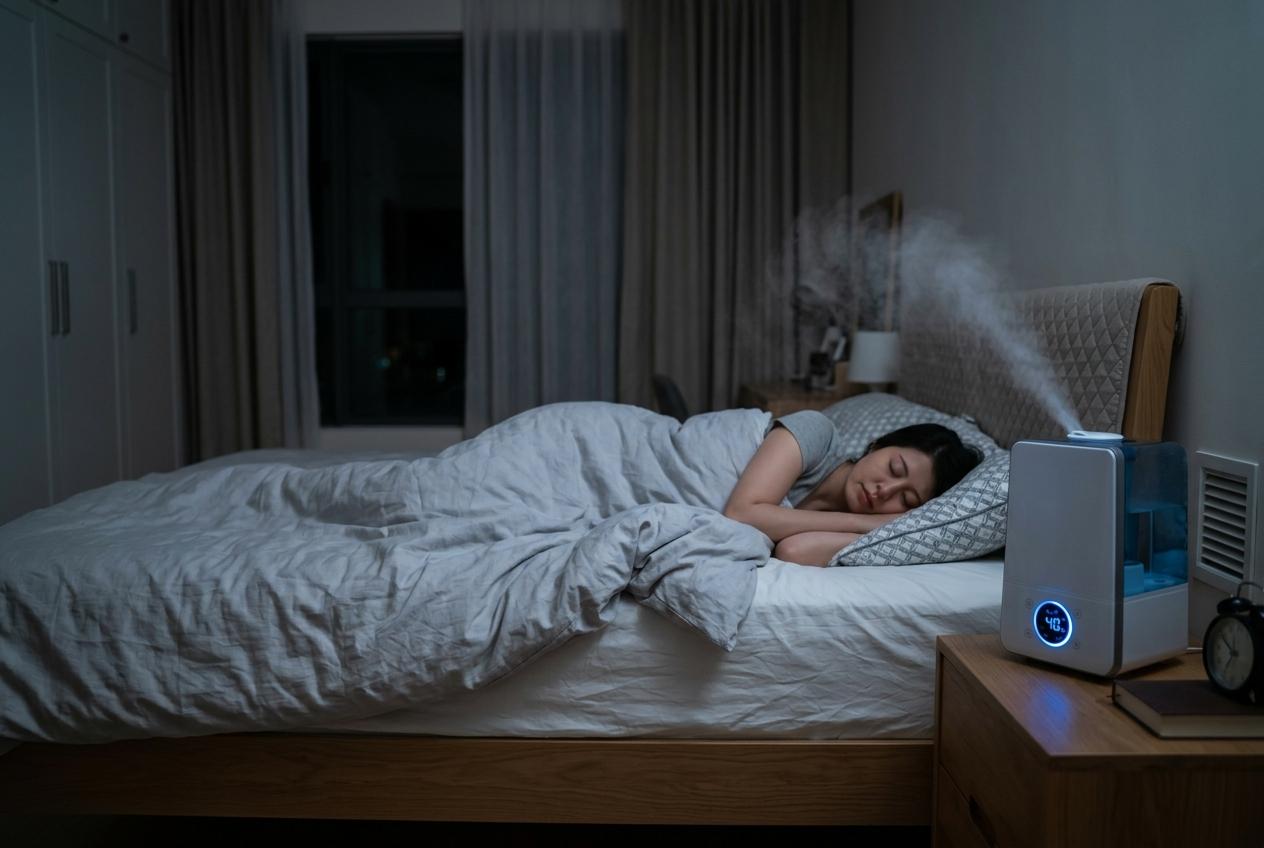
A bedroom humidifier can make a significant difference during dry months. Aim for humidity levels between 30-50% in your sleeping area. Position air vents so they don’t blow directly on your bed, and consider using a sleep mask if your eyelids don’t close completely.
Wash your bedding weekly in hot water to reduce dust mites and allergens that can irritate your eyes overnight.
Bedtime Eye Care Routine
Apply preservative-free artificial tears right before you go to sleep. These drops provide extra lubrication that can help your eyes stay comfortable longer overnight. Remove your contact lenses several hours before bedtime to give your eyes time to recover.
A gentle warm compress on closed eyes for 5-10 minutes before sleep can help improve the quality of your natural tear film by encouraging healthy oil gland function.
Professional Help for Persistent Morning Dry Eyes
Comprehensive Eye Care Assessment
If your morning dry eyes continue despite home care efforts, an eye doctor can evaluate your tear film quality and quantity. They can test how well your meibomian glands function — these glands produce the oils that keep your tears from evaporating too quickly.
A thorough assessment can identify the specific factors contributing to your morning discomfort and help create a treatment plan that fits your lifestyle and symptoms. Comprehensive eye exams can reveal underlying conditions that contribute to dry eye symptoms.
Treatment Options Available
Modern dry eye treatments go beyond simple artificial tears. IPL therapy can help restore proper gland function, while TempSure radiofrequency treatment offers another approach to improving tear quality. Prescription medicated eye drops can also provide longer-lasting relief than over-the-counter options.
These treatments address the root problems that contribute to morning dry eyes, rather than just temporarily masking symptoms.
Morning dry eyes don’t have to be part of your daily routine. With the right combination of environmental changes, bedtime habits, and professional care when needed, you can wake up with comfortable, refreshed eyes. At Waterdown Optometric Clinic, we can help identify what’s behind your morning dry eye symptoms and develop a treatment approach that works for your lifestyle. Contact us today to start your journey toward more comfortable mornings.