

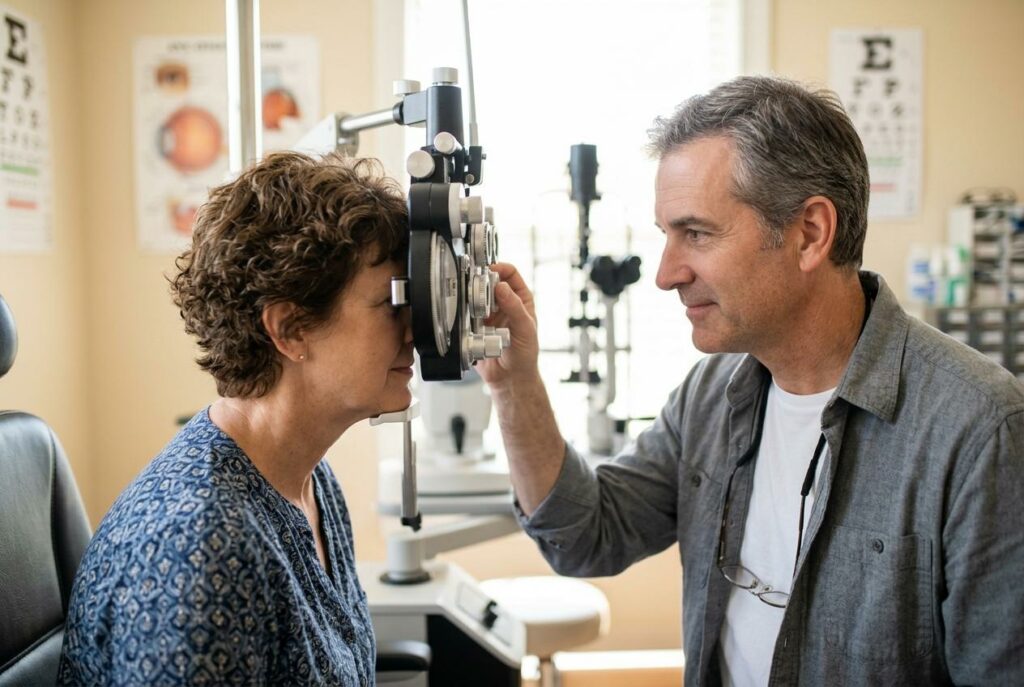
You might think of eye exams as simple vision checks, but your eyes reveal far more than whether you need glasses. During a comprehensive eye exam, your eye doctor can spot signs of serious health conditions that affect your entire body. Waterdown Optometric Clinic has been helping patients understand these connections since 1990, using technology to detect health issues through thorough eye examinations.
Your eye doctor can detect dozens of diseases during a routine eye exam, including glaucoma, diabetes, high blood pressure, autoimmune conditions, and even some types of cancer. The blood vessels, tissues, and nerves in your eyes provide a clear window into your overall health.
Eye Conditions Your Eye Doctor Can Find
Your eye doctor looks for specific eye diseases that can steal your vision without warning. Glaucoma develops silently, damaging your optic nerve through increased eye pressure. You won’t notice symptoms until significant vision loss occurs.
Diabetic retinopathy shows up as changes to your retinal blood vessels — damage that can progress to blindness if left untreated.
Macular degeneration affects the central part of your retina, gradually eroding sharp, detailed vision. Your eye doctor can spot early warning signs before you notice any reading difficulties or changes to your central vision.
Serious Health Problems Visible During Eye Exams
Diabetes & Blood Sugar Issues
Your retina acts like a health report card for diabetes. When blood sugar remains elevated over time, it damages the small blood vessels in your eyes. Your eye doctor can see these changes before you experience vision problems.
Diabetic retinopathy shows up as tiny hemorrhages, yellow deposits, or swelling in your macula. In severe stages, your eye grows new blood vessels that can bleed and cause sudden vision loss. Many people discover they have diabetes through routine eye exams. Specialized diabetic eye care helps monitor these changes closely.
High Blood Pressure Detection
Your eye doctor can see how high blood pressure affects your body by examining your retinal blood vessels. Chronic high blood pressure makes these vessels narrow, twist, or develop small hemorrhages.
Severe high blood pressure creates cotton wool spots on your retina — areas where blood flow has stopped. Your optic nerve might swell in extreme cases, signaling dangerously high blood pressure that needs immediate medical attention.
Neurological Concerns, Including Stroke or Brain Tumours
Because your eyes are closely connected to your brain and nervous system, a comprehensive eye exam can sometimes reveal warning signs of neurological concerns. Changes in your optic nerve, pupil reactions, eye movements, or visual field may point to issues that require further medical investigation.
In some cases, these findings may be associated with serious conditions such as a stroke or, less commonly, a brain tumour. Your eye doctor cannot diagnose every neurological condition from an eye exam alone, but they can identify concerning signs and refer you for additional care when needed.
Autoimmune & Liver Conditions Through Your Eyes
Your eyes reveal clues about autoimmune diseases that attack multiple body systems. Rheumatoid arthritis can cause painful eye inflammation called scleritis or uveitis. Multiple sclerosis often affects your optic nerve, causing vision problems that might be your first symptom.
Liver disease shows up as yellowing of your eye whites, called jaundice. This happens when your liver can’t process waste products properly. Your eye doctor might be the first healthcare provider to notice this sign of liver problems.
Thyroid conditions affect your eye muscles and eyelids. Hyperthyroidism can make your eyes bulge or cause double vision as the muscles around your eyes become inflamed and swollen. Comprehensive eye exams help identify these systemic health connections.
Technology That Makes Detection Possible
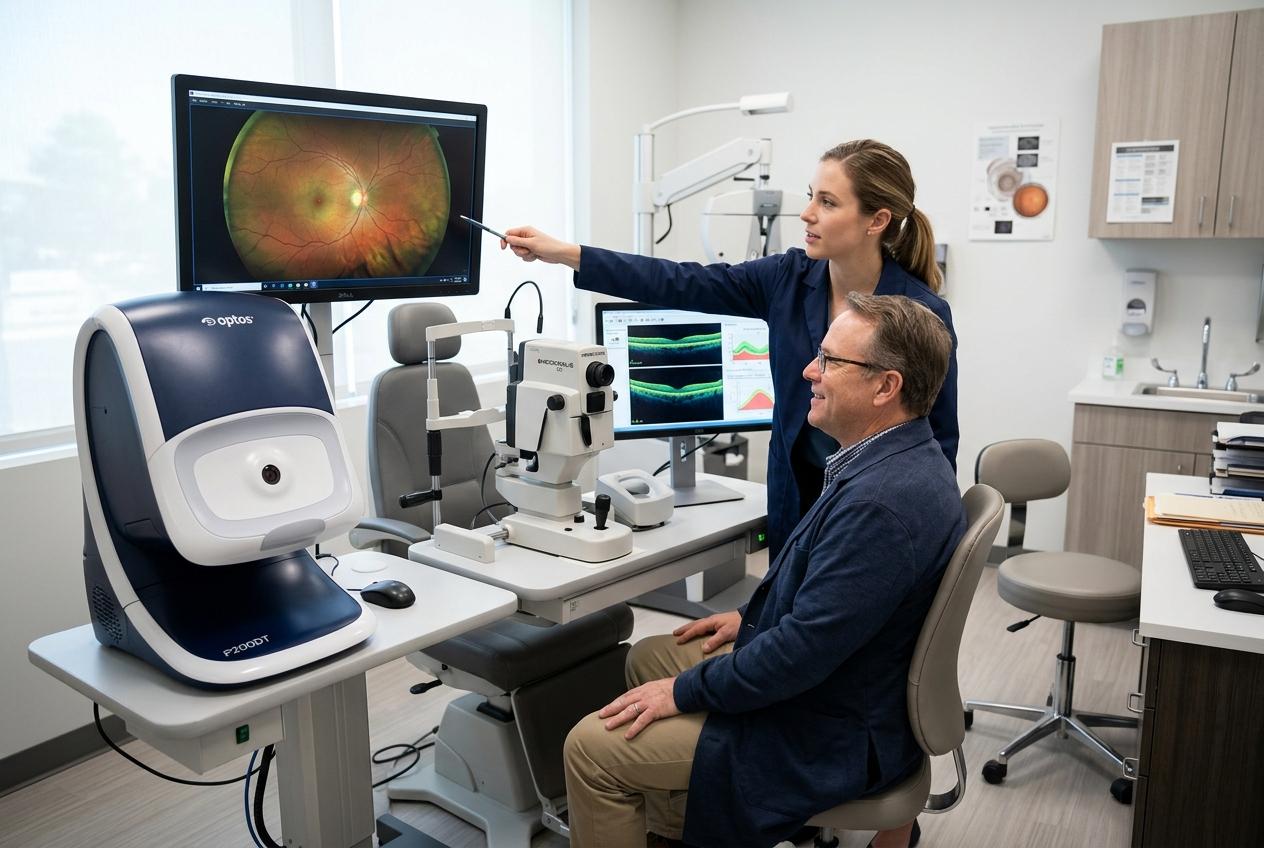
Modern eye care technology lets your eye doctor see details impossible with basic examination tools. OPTOS wide-field retinal photography captures 82% of your retina in one image, revealing problems in areas that traditional methods miss.
OCT scans create detailed cross-sections of your retinal layers, showing thickness changes that indicate macular degeneration, glaucoma, or diabetic damage. Visual field testing maps your peripheral vision to detect early glaucoma or neurological problems affecting your brain.
This technology helps your eye doctor catch diseases in their earliest stages, when treatment is most effective. Many conditions that once led to blindness can now be managed effectively with early detection.
When to Schedule Your Comprehensive Eye Exam
Some symptoms demand immediate attention and can’t wait for your next scheduled exam. Sudden vision changes, especially in one eye, might signal a stroke or retinal detachment. New floaters accompanied by flashing lights could mean your retina is tearing.
Persistent eye pain with headaches might indicate acute glaucoma, which can cause permanent vision loss within hours without treatment. Emergency eye care addresses these urgent situations promptly.
Adults over 40 should have comprehensive eye exams annually because many sight-threatening conditions develop silently during these years. Your eye doctor can track subtle changes over time that might be missed during longer intervals between visits. Regular eye exams help catch systemic diseases before they cause serious health complications.
At Waterdown Optometric Clinic, we combine advanced technology with thorough examinations to protect both your vision and your overall health. Book your comprehensive eye exam today — early detection can save your sight.