

Key Takeaways
- Face shapes fall into 6 general groups, and you only need the closest match.
- Angular frames add definition to softer faces, while curved frames soften stronger angles.
- Fit matters more than shape, since sliding or pinching frames affect comfort and vision.
- Colour and personal style can matter as much as geometry.
- An optical team can help you compare frames and adjust them for a level fit.
New glasses sit right in the middle of your face, so it makes sense to want a pair that feels like you. Knowing your face shape gives you a place to start.
Frames usually look balanced when their shape contrasts with your face, so a rounder face often pairs well with angular frames, and curved frames can soften a face with strong angles. Comfort and fit matter just as much, and so does what you like to wear. That’s why the team at Waterdown Optometric Clinic starts every frame and lens selection with a conversation about your style and daily routine.
How to Figure Out Your Face Shape
Stand in front of a mirror with your hair pulled back, or snap a quick selfie facing straight ahead. Look at where your face is widest and where it narrows. That contrast tells you almost everything you need.
For a closer look, grab a soft measuring tape and check these 4 spots:
- Your forehead at its widest point
- Across your cheekbones
- Your jaw at its widest point
- From your hairline to your chin
The 6 Common Face Shapes
Most faces fall into one of these 6 groups:
- Round: Soft edges, with a width and length that are about the same
- Oval: Longer than it is wide, with gentle curves
- Heart: Wider at the forehead and narrower at the chin
- Square: A strong jaw, with similar measurements from the forehead down
- Triangle: Narrower at the forehead and wider at the jaw
- Diamond: Prominent cheekbones, with a narrower forehead and chin
If you land somewhere between 2 shapes, go with the closer match and use it as a starting point.
Which Glasses Suit Each Face Shape
Each face shape has a few frame styles that tend to balance it.
Glasses for Round Faces
Rectangular and geometric frames can add structure where your face curves. Straight lines across the top create definition, and a thicker browline draws attention upward.
Glasses for Oval Faces
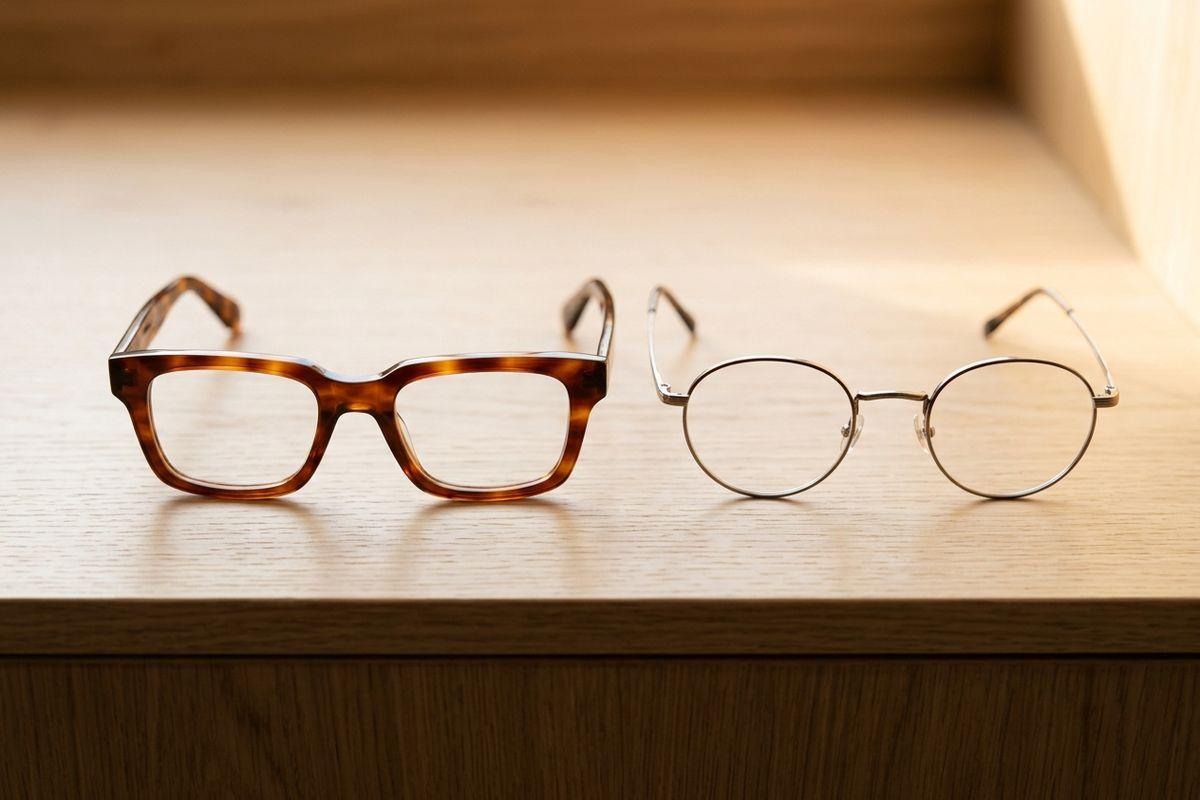
Most frame shapes work well on oval faces, so you can follow your own taste. If you’ve always wanted round tortoiseshell frames or a bold rectangular pair, try on both.
The same goes for prescription sunglasses. Larger styles can give your eyes more coverage from UV rays.
Glasses for Square Faces
Round and oval frames can soften a strong jawline. Semi-rimless styles also work well because they keep sharp frame corners from competing with the angles of your face.
Glasses for Heart-Shaped Faces
Pick frames slightly wider than your forehead. That bit of extra width can even things out between the top and bottom of your face, and thin or light-coloured frames keep the upper half from looking heavy.
Glasses for Triangle Faces
Browline and cat-eye frames pull attention upward, which can balance a wider jaw. Look for colour or detail along the top edge of the frame, where your face is narrowest.
Glasses for Diamond Faces
Oval frames with soft curves can complement prominent cheekbones. Rimless styles or frames with thin lower edges keep the focus on your eyes.
Why Fit and Personal Style Matter More Than Shape
Frames that slide down your nose every 20 minutes get frustrating fast. When your lenses move out of position, you’re no longer looking through the part of each lens that’s lined up with your prescription.
People who wear progressive lenses for presbyopia, which makes it harder to focus up close as you age, tend to notice this right away. Each zone of a progressive lens is set for a different distance. If your frames leave marks on your nose or rest on your cheeks, ask about low bridge fit options. These frames have adjusted nose pads and angles that help them sit level on a lower or wider nose bridge.
Bold shades like deep teal or amber stand out and pair well with simple outfits. Soft grey, brown, and clear acetate blend in with whatever you’re wearing that day.
Face Shape as a Tiebreaker
Treat face shape as a guide. When you’re stuck between 2 pairs you like equally, it can help you decide.
Try on the frames you’re drawn to, even the ones a chart says to skip.
Lens Options to Consider with New Frames
Your lenses affect how your glasses look and feel. Strong prescriptions can mean thicker lens edges, so bring your prescription from your latest comprehensive eye exam and let it guide your frame size. Depending on your routine, you may want to ask about:
- Digital progressive lenses for smoother focus changes between near and far
- Blue light-filtering lenses for long days on screens
- Scratch-resistant lens treatments
- Task-specific glasses for computer work or hands-on hobbies at a set distance
- Durable sport lenses for kids who play sports or spend a lot of time outdoors
Book a Frame Fitting and Find Your Next Pair
At Waterdown Optometric Clinic, our optical team pulls frames that suit your measurements and prescription, then helps you narrow down your choices. Once you’ve picked a pair, we’ll adjust the temples and nose pads so your glasses sit level and feel comfortable through the day.
Our clinic’s in-house lens edger cuts and fits lenses to your frames on-site, which can mean less time waiting for your new glasses. Book an appointment and browse frames with a team that takes the time to get the fit right.