
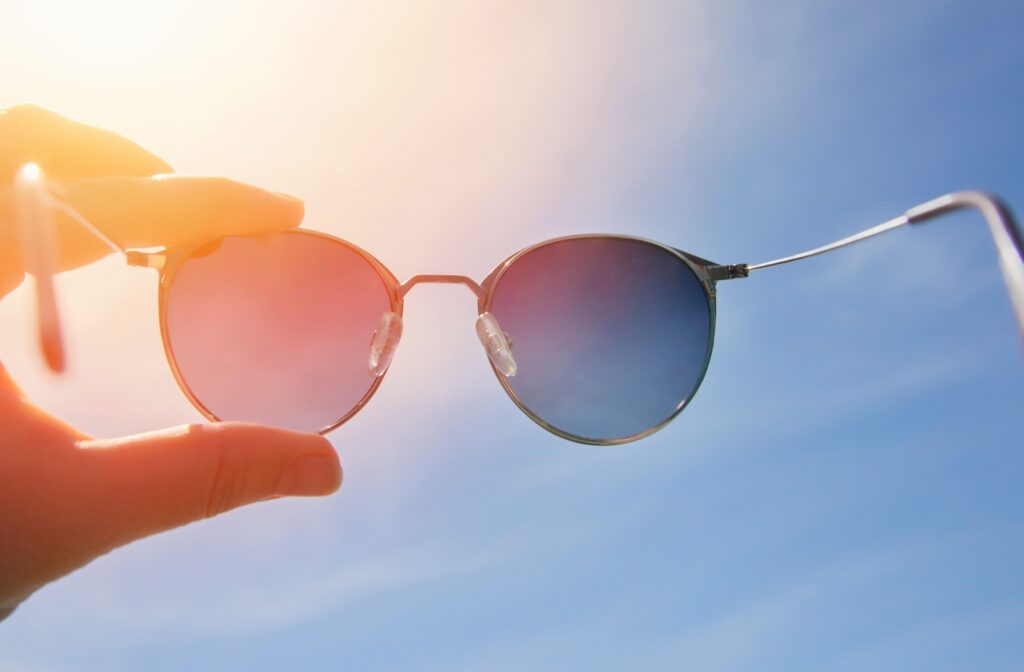
You squint against the glare as you step outside on a sunny day. Your eyes water, and you find yourself struggling to see clearly despite wearing regular sunglasses.
Polarized sunglasses can significantly improve your eye comfort and visual clarity by blocking the horizontal light waves that cause glare, though they aren’t always the right choice for every situation. Our team at Waterdown Optometric Clinic can guide you toward better eye protection that matches your needs.
What Polarized Sunglasses Do for Your Vision
Polarized lenses work like venetian blinds for your eyes. These lenses contain a filter that blocks horizontal light waves while allowing vertical light waves to pass through. This selectively filters the light that causes glare.
When sunlight hits flat surfaces like water, snow, or car hoods, it reflects back as horizontal waves that we perceive as glare. Regular sunglasses reduce the amount of light that reaches your eyes, but they don’t block glare specifically.
Polarized lenses eliminate glare, allowing you to see more clearly and comfortably. You’ll notice the difference immediately when you look at a wet road or body of water—the surface will appear clear and more detailed.
Key Benefits of Polarized Lenses
Enhanced Comfort & Safety
Your eyes work harder when dealing with glare, leading to fatigue and strain throughout the day. Polarized lenses reduce this extra effort by cutting through the harsh reflected light that forces you to squint and struggle.
When you’re driving, polarized sunglasses help you see road hazards more clearly by reducing glare from wet pavement and other vehicles. You can spot pedestrians, cyclists, and road signs more easily when bright reflections aren’t interfering with your vision.
Many people also experience fewer headaches when wearing polarized lenses during outdoor activities.
Protection from Harmful UV Rays
Like any quality pair of sunglasses, good polarized lenses block harmful ultraviolet radiation like UV-A and UV-B that can contribute to serious conditions like cataracts, macular degeneration, and growths on the eye’s surface.
The skin around your eyes is particularly delicate and prone to sun damage. Polarized sunglasses with proper coverage protect this sensitive area from premature aging, wrinkles, and potential skin cancer.
Think of UV protection as sunscreen for your eyes. Just as you wouldn’t spend hours outdoors without protecting your skin, your eyes need consistent UV protection to maintain long-term health.
When Polarized Sunglasses Might Not Work
Digital screens and LCD displays can appear dark or completely black when viewed through polarized lenses. This happens because many electronic displays emit polarized (horizontal) light, which gets blocked by your sunglasses’ filter. If you spend significant time viewing screens outdoors, managing digital eye strain requires balancing glare reduction with screen visibility.
Some car dashboard displays become difficult or impossible to read with polarized lenses. You might need to tilt your head at odd angles to see important information like your speedometer or GPS navigation.
Certain winter sports require you to see ice patches and changes in snow texture for safety. Polarized lenses can make these surface variations less visible, potentially creating hazardous conditions for skiing or snowboarding.
How to Choose the Right Sunglasses

Features to Look For
UV protection should be your top priority, whether you choose polarized or non-polarized lenses. Look for sunglasses that block 100% of UV-A and UV-B rays—this protection is separate from polarization and equally important.
Quality lens materials and coatings make a significant difference in durability and visual clarity. Tough coatings with good warranties protect your investment and maintain clear vision over time.
Proper fit affects both comfort and protection. Sunglasses should sit securely without pinching your nose or sliding down, and the lenses should provide adequate coverage around your eyes.
Professional Fitting Makes a Difference
An optometric professional can adjust your sunglasses for comfort and effectiveness. These adjustments help your sunglasses stay in the right position throughout your daily activities.
If you wear prescription glasses, you can combine your vision correction with polarized lenses. This eliminates the need to choose between clear vision and glare protection when you’re outdoors.
Eye care professionals can also recommend additional lens treatments based on your lifestyle.
Your Next Steps for Better Eye Protection
A comprehensive eye exam helps determine your current vision needs and overall eye health. This assessment guides your sunglasses selection and identifies any prescription requirements you might have. Regular eye exams also detect early signs of UV-related damage before they affect your vision.
Your daily activities and outdoor hobbies help identify the most suitable lens options. Your lifestyle determines whether polarized lenses can enhance or interfere with your vision needs.
Waterdown Optometric Clinic combines extensive technology with personalized service to help you find the right sunglasses for your needs. Schedule your eye exam today to discover how the right eyewear can improve your outdoor comfort and protect your long-term vision health.